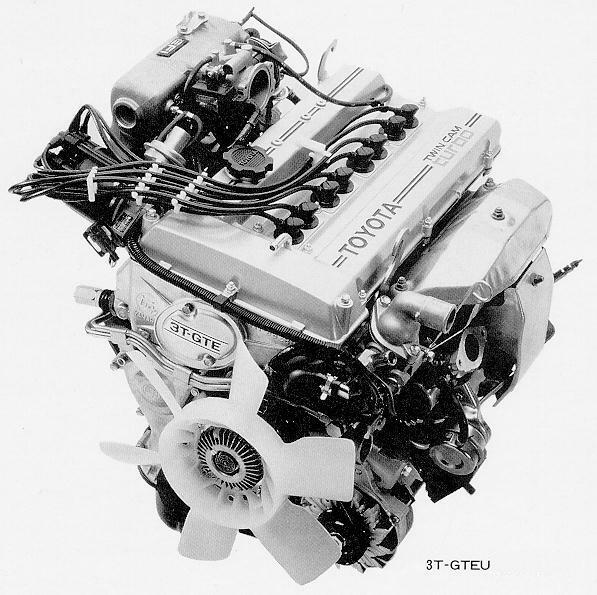
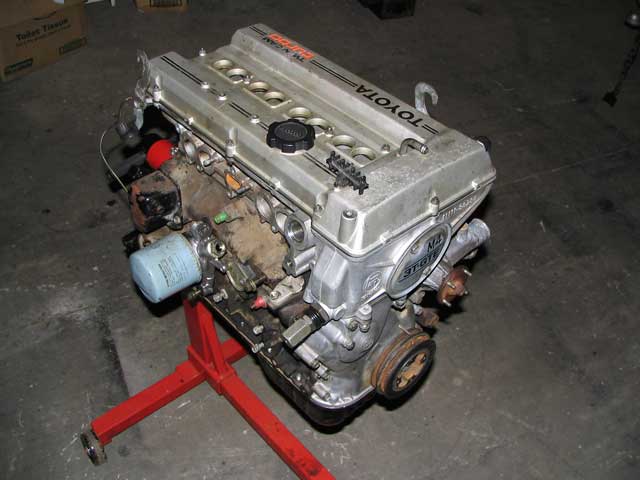
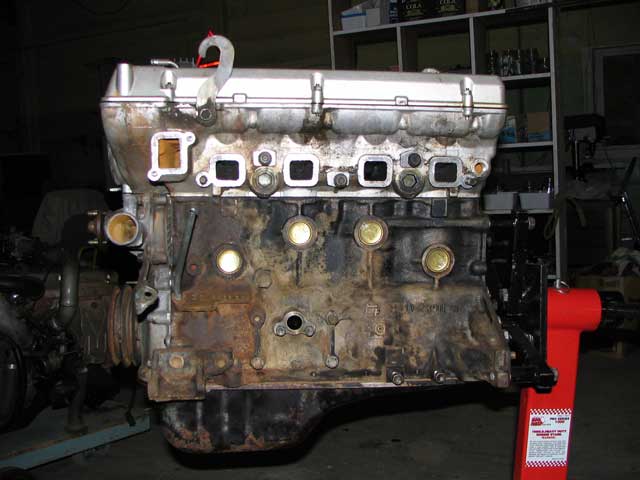
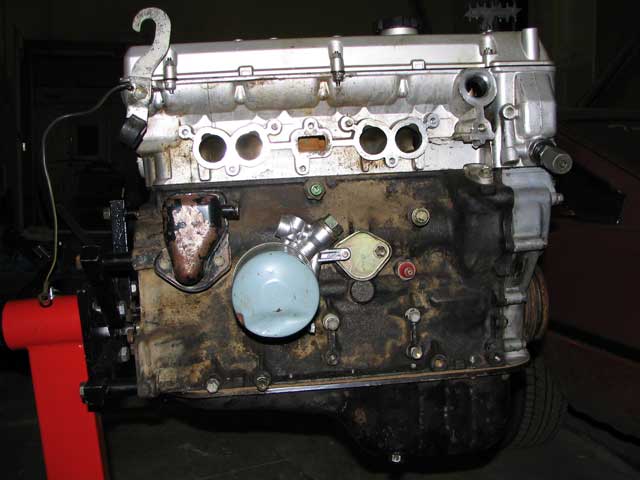
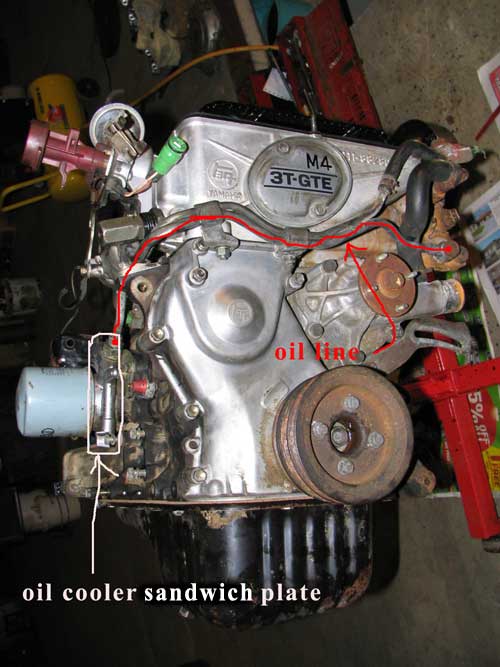
Soon to be the one stop spot for 3tgte info... need to know anything not already mentioned? ask away!
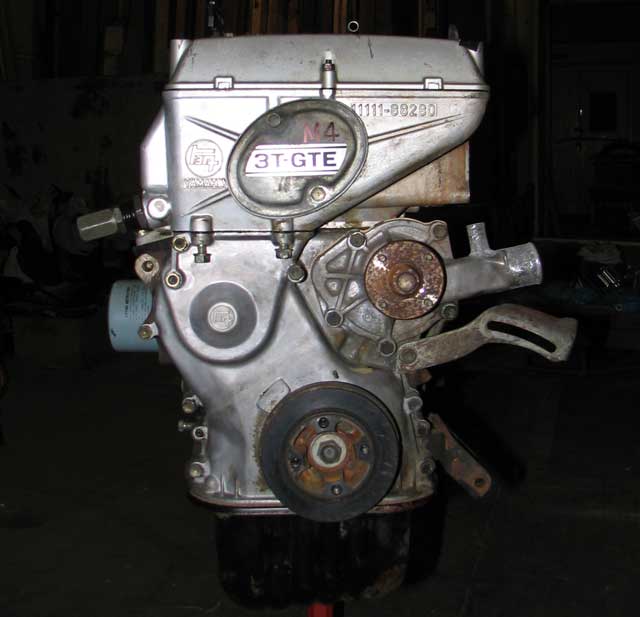
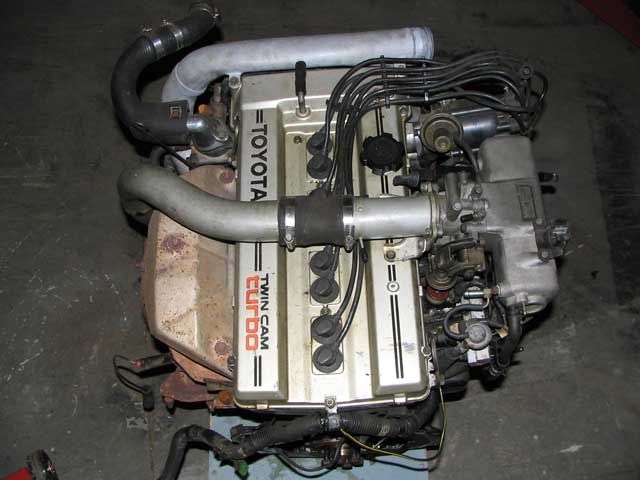
3tgte Specs:
|
3TGTE |
Soon to be the one stop spot for 3tgte info... need to know anything not already mentioned? ask away!
3tgte Specs:
| Engine | 3T-GTEU |
| Capacity | 1770cc |
| Bore / Stroke | 85mm x 78mm |
| Power | 160ps (118kw) @ 6000rpm |
| Torque | 21kg/m 152ft/lb @ 4800rpm |
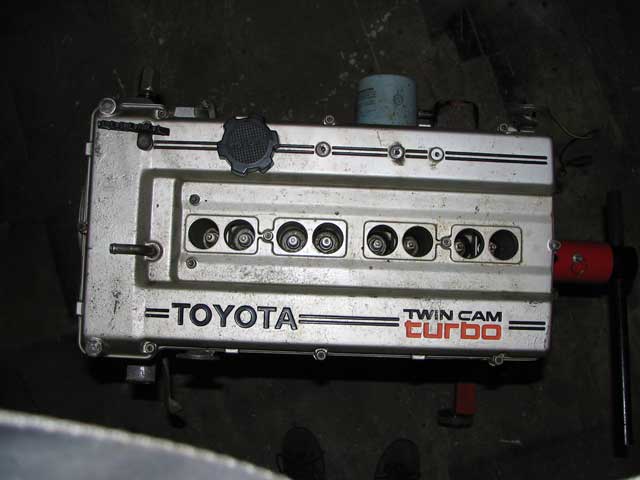
| Head | 8 Valve, Twin-cam (under bucket shims), Twin-spark, hemispherical chamber |
| Injectors | Nippondenso 295cc, 2.2ohm approx |
| Cams | approx 210 duration @ 0.050" (9mm lift w/ 0.3mm clearance) (from matti's site) |
| Cam drive | Double-row Chain |
| Valve size | 44.5?mm intake, 38.5mm exhaust |
| Valve springs | double |
| Throttle | 50mm dia, TPS= 1.5' 20' switch positions |
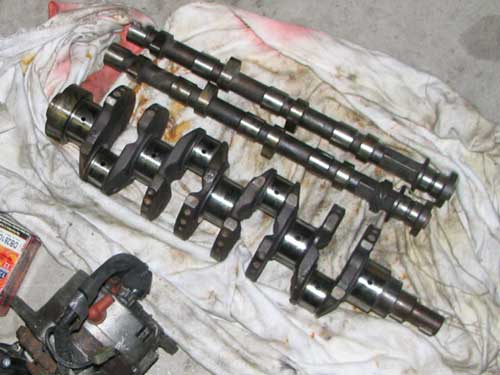
| Crank | Cast, 8 counterbalance, mains 58mm, big ends 48mm |
| Pistons | cast alloy |
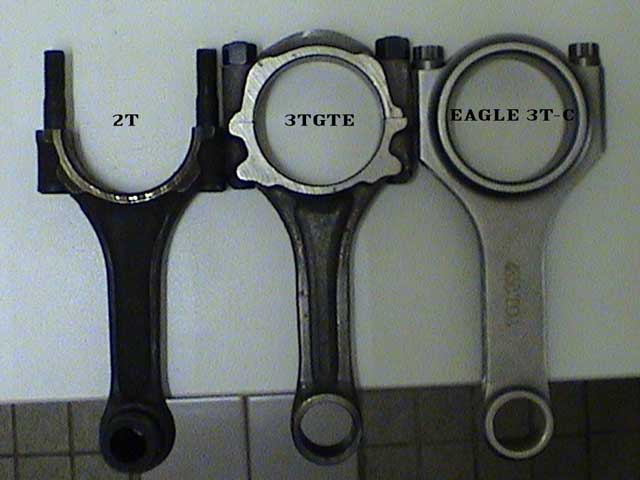
| Connecting Rods | Steel, 51mm big-end (48mm crank journal), 22mm small end, 123mm between centers |
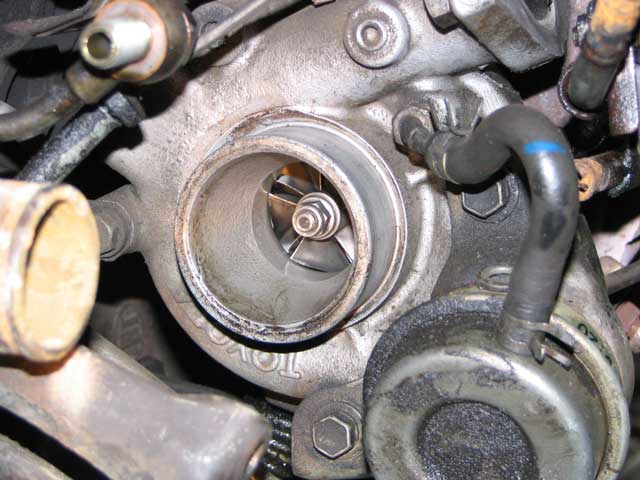
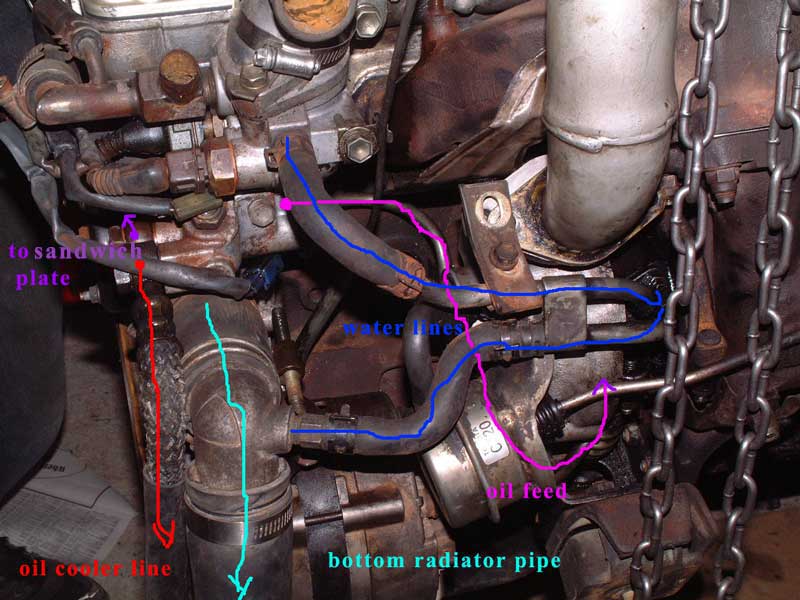
| Turbo | Toyota CT20 (oil cooled or oil/water cooled) internal wastegate, plain bearing, running 0.5bar 7.3psi |
| Intercooler/BOV | None |
| Flywheel/Clutch | 6 bolt 8kg cast iron, 225mm/9" clutch |
| Efi system | Nippondenso L-Jetronic analog with knock control |
| Spark plugs | 8x Denso W20EXR-U11 or NGK BPR6EY11 0.8mm gap |
| Oil | SAE 10W-30, API classification SE/SF or higher preferred |
| Produced | 1982-1985 |
| Vehicles | TA63 Celica, TA63 carina, TT142 Corona GT-T & GT-TR |
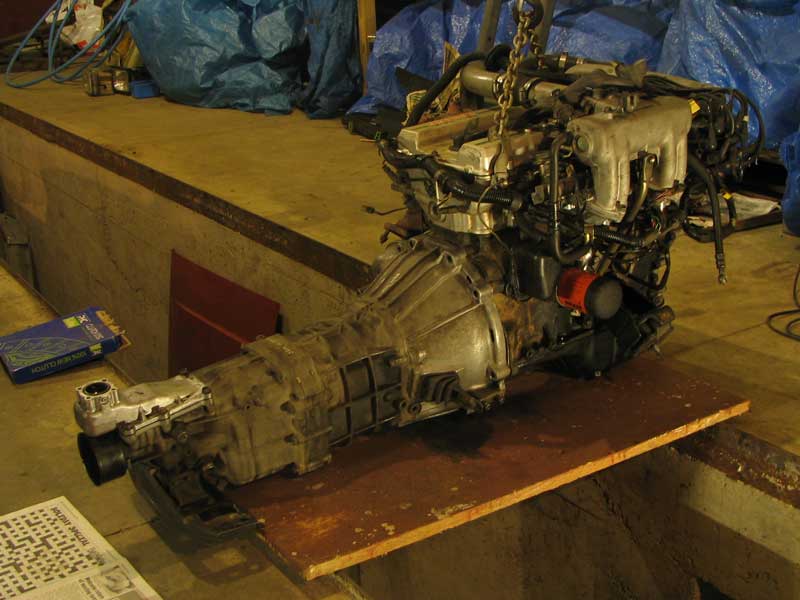
| Gearbox | W55 5speed or A43D auto |
| Diff | IRS 7.5". code F292 4.1:1 ratio (most common) or F312 3.9:1, LSD was optional in these cars (mechanical spring loaded clutch). |
3TGTE Torque specs: ft/lb
Crank main bearings 58
Conrod big end bearings 36 (500 +/- 50)
Harmonic balancer to crank 65
Flywheel to crank 62
Clutch pressure plate to flywheel 14
Head bolts to block 58 (800 +/- 80)
Timing gears to cams 54 (750 +/- 50)
Cam bearing caps 14
Exhaust manifold to head 29
Intake manifold to head 14
Turbo to exhaust manifold 29
Exhaust dump pipe to turbo 16
Throttle body to intake manifold 9
Gearbox bell housing to block
12mm bolt 47
10mm bolt 27
Waterpump 14
Oil Pump 15
Valve clearances
Intake 0.29mm +/- 0.05
Exhaust 0.34mm +/- 0.05
Oil Pump
300rpm = 2.7L/m volume or more, 2kg/cm2 pressure
3000rpm = 43L/m volume or more, 3kg/cm2 pressure
Oil relief valve
4.0 +/- 0.4kg/cm2
3tgte crank pulley timing marks = 0deg TDC and 12deg BTDC
Source: Toyota 3T-GTEU (1982-85) factory manual
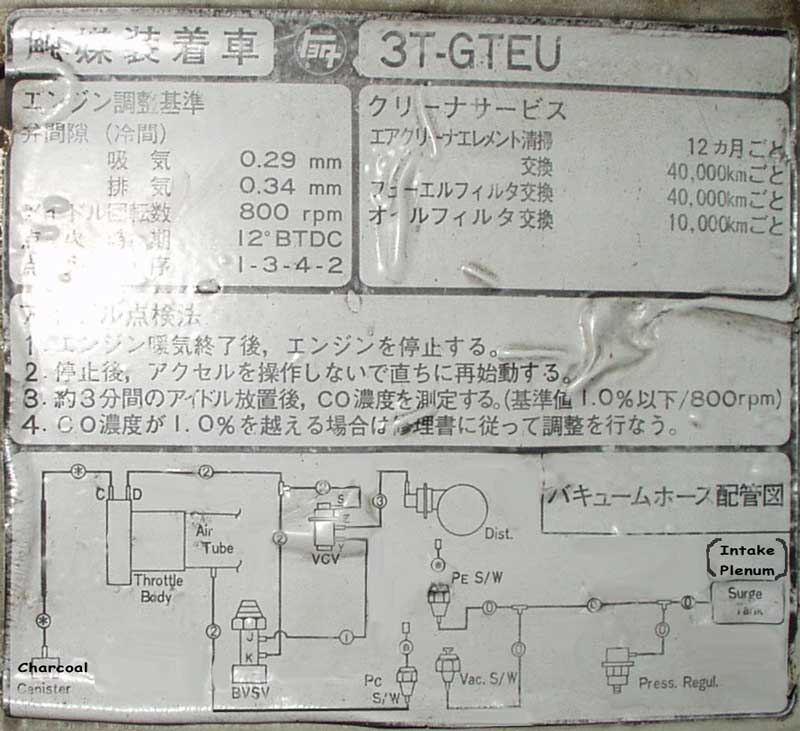
3tgte emissions and tuning sticker found under bonnet of a TT142 corona GT-T
net sources say 10deg? btdc @ 1000rpm for timing... this says 12deg @ 800rpm?!
2tgeu (orange) & 3tgte (green) ecu plugs.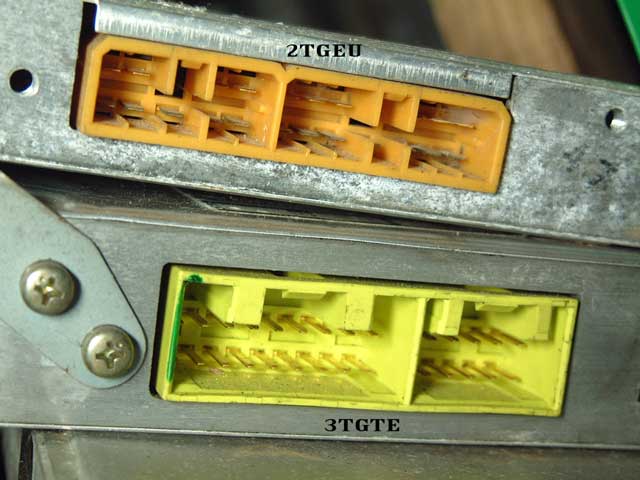
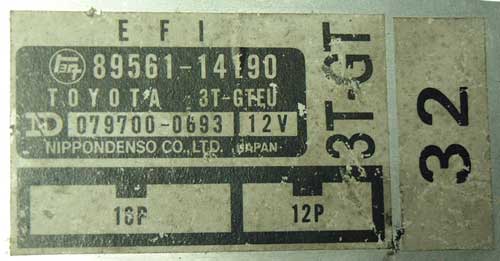 3tgte ecu sticker
It seems that '31' found on oil cooled turbo ecu and '32' on water cooled turbo versions (from observation, not proof!)
|
Injector part numbers:
|
|
|
#
|
jet pattern |
| 195500-0662 | narrow |
| 195500-0666 | narrow |
| 195500-0668 | wide? |
Toyota part number is listed as 23250-28011
nippon-denso type, web sources say these flow 295cc
Have found 3 different injector part numbers (listed above) but when tested, all flowed the same amount
Cold Start - High Oil Pressure Issue.
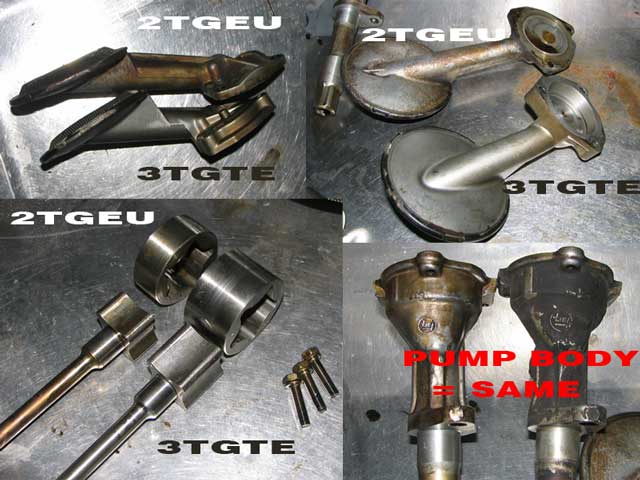
3TGTE with high k’s are known to have a high oil pressure issue in excess of 100psi when revving whilst cold. The cause is a worn oil pressure relief valve bore in the oil pump body. The pressure relief valve basically jams in the closed position. Evidence of this can be seen by a ridge in the valve bore where the piston has dug in. This is often accompanied by an irregular oil pressure at idle due to the worn valve bore allowing the valve piston to move off center from it's tapered seat. To fix, replace the oil pump or the oil pump housing which contains the pressure relief valve. A 2tgeu pump housing interchanges with 3tgte.
Oil Filter
OEM Toyota Nippon-Denso: 90915-20003
It is highly recommended to use the genuine Denso oil filter in a 3tgte with 100+kms on it. The denso filter has proven to handle a higher oil pressure than the aftermarket replacements like Fram or Repco filters. Otherwise, a 3t-c filter with anti drain back valve will also fit.
Where to buy new 3tgte related parts: -NZ-
Toyota New Zealand.. Ask any toyota dealer in NZ and they'll be able to source any parts still currently available out of Japan. (not alot).
Segedins Truck & Auto. http://www.staparts.co.nz can source some aftermarket parts from Japan and Australia. (ACL)
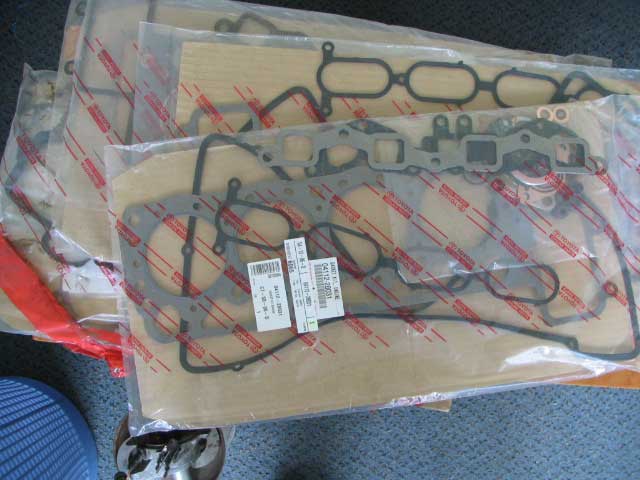
ACL Gaskets Australia produce 2tgeu, 3t-c and 3tgte seals and gaskets. ACL gaskets are distributed worldwide by general car parts stores. Not all stores list the available gaskets so referring to the part numbers in the link may help.
ACL 3tgte head set V2059KC is also available. The gaskets in this set I believe are OEM. They look identical!
-International-
SWMotorsports (search 2tg or 3tg) Australia
Kameari USA/Japan
BRD Racing USA
ToyHeadAuto Canada
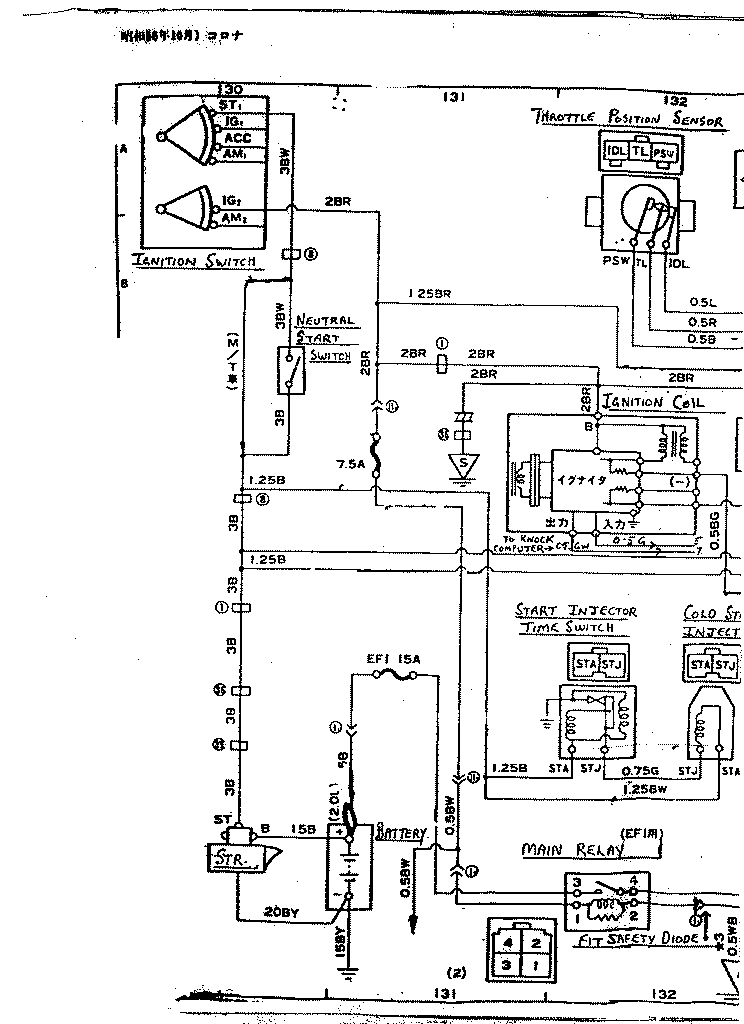
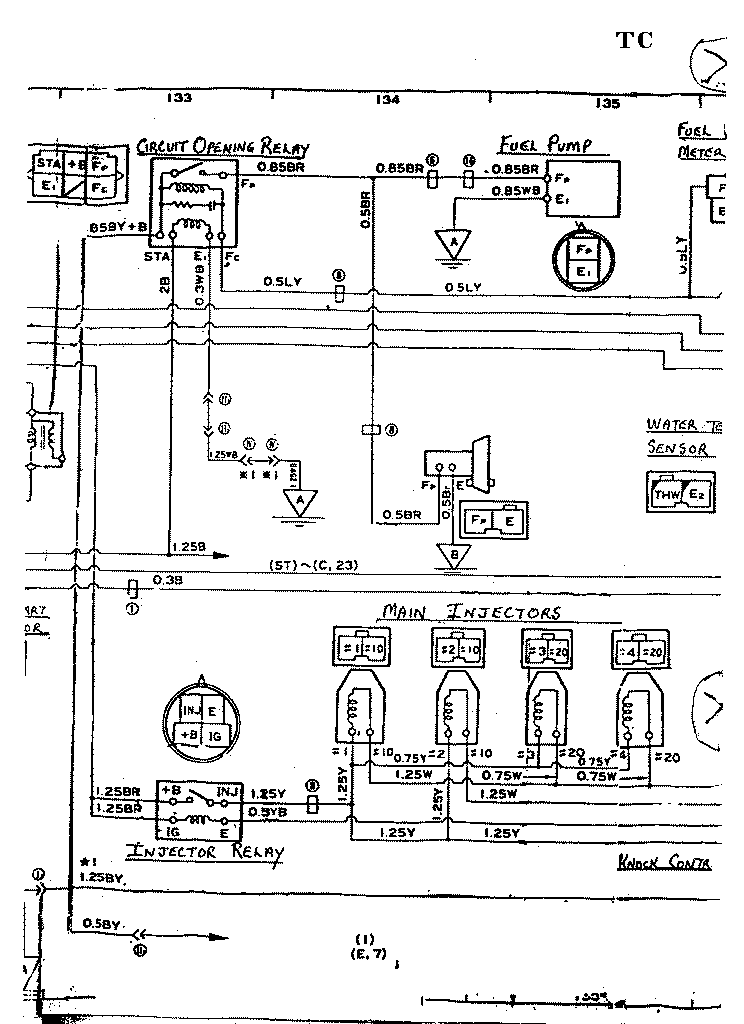
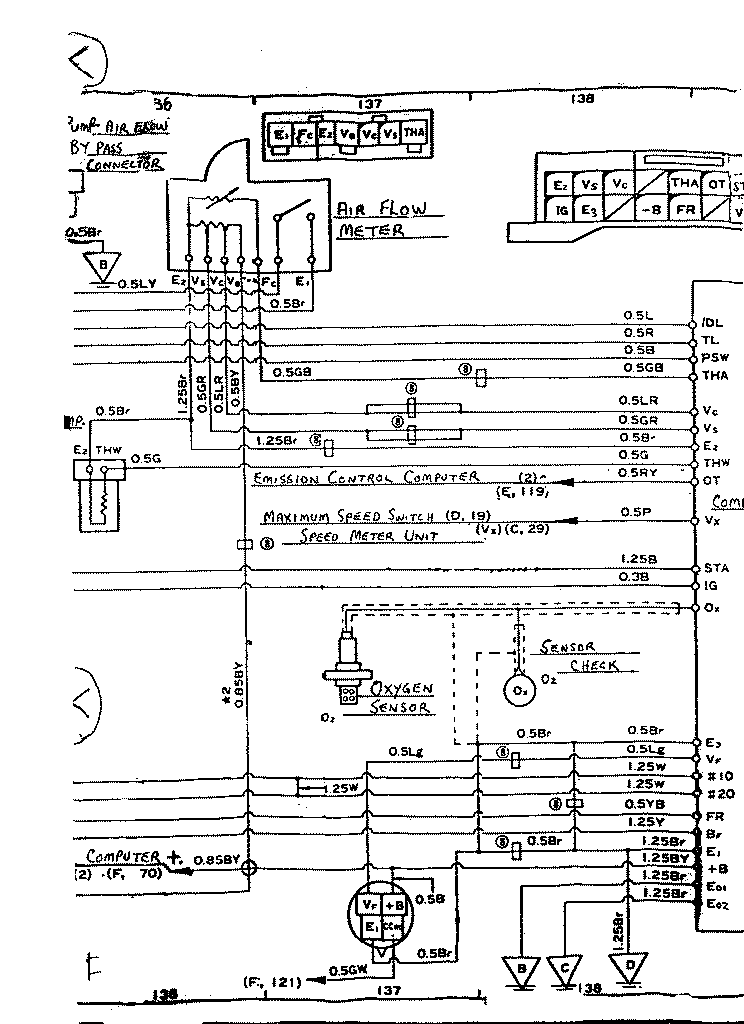
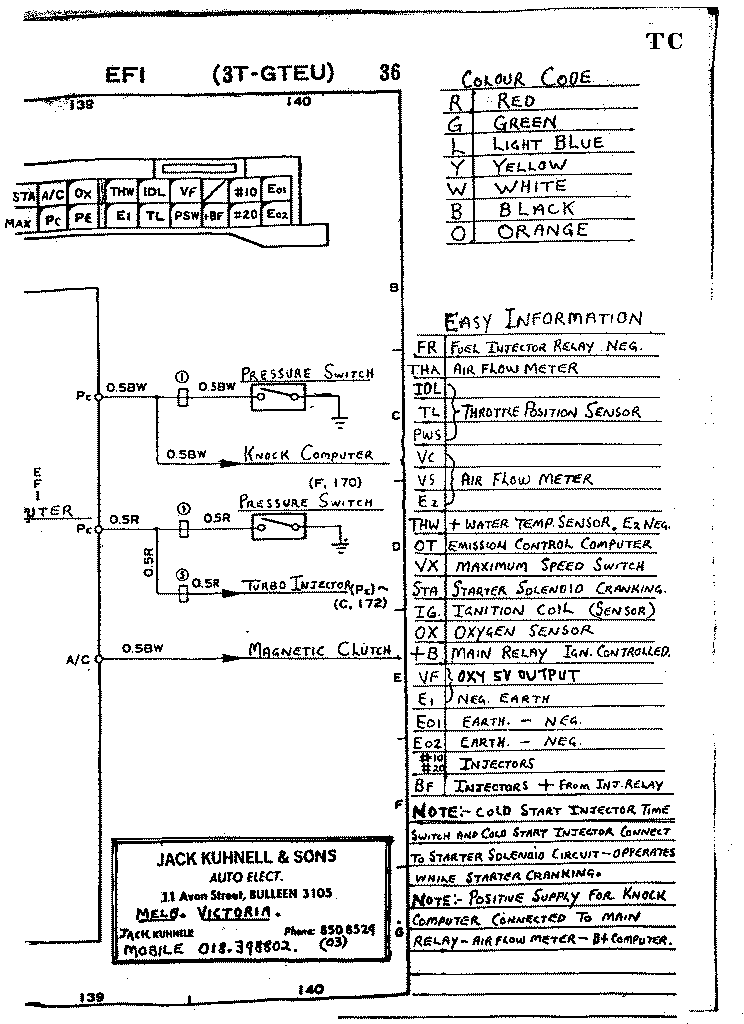
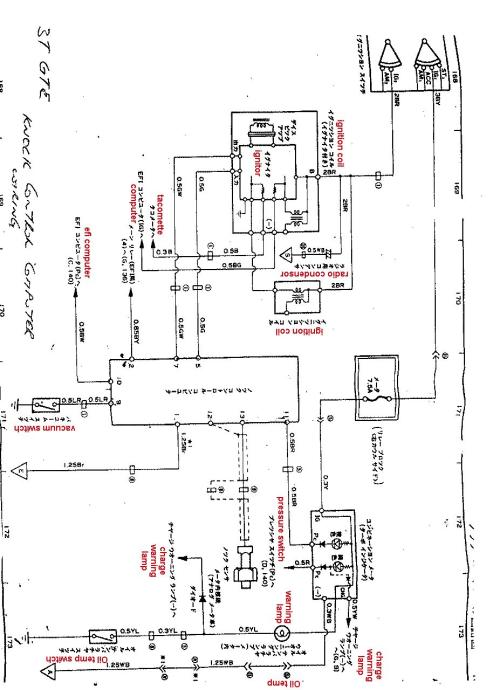
3TGTE wiring diagrams as found all over the net
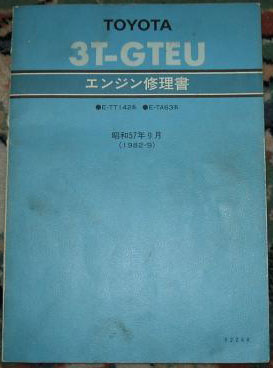
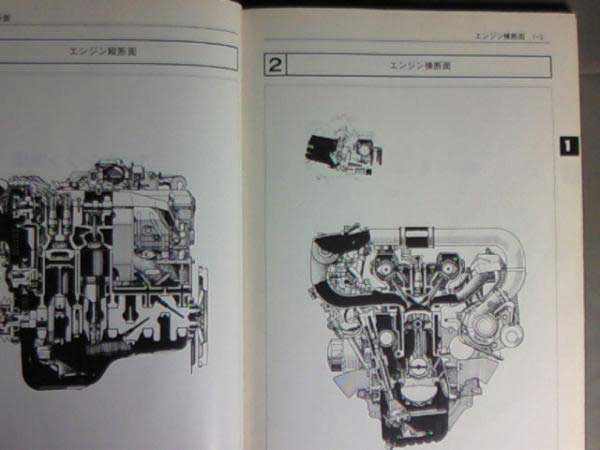
The 3TGTE workshop manual - (coming soon...)
|
 |
 |
 |
 |
 |
 |
 |
 |
 |
 |
 |
 |
 |
 |
 |
 |
 |
 |
 |
 |
 |
 |
 |
 |
Modifications:
block off vacuum hose to the fuel cut pressure switch (connects to intake pipe before the throttle body).. not required if running std 7.5psi but becomes an issue when raising boost or have boost creep.
Fit an intercooler! do this before raising boost. Heat wrap the compressor outlet piping near the turbo to help shield from the hot air around the turbo.
Fit larger exhaust. 2.5" works well with a mildly tuned engine.. This mod will make the CT20 boost creep. Porting the CT20 wastegate only reduces creep marginally.
Washable type air filter (like K&N) to increase air intake flow. Anything to improve air flow before the turbo will likely be noticeable ie moving airbox and shortening piping to the exhaust side.
If removing std cold air box and fitting a pod filter, make a new airbox around the new filter with a duct to the front, as engine bay temps will reduce any benefit of a free flow filter
Replace the CT20! for the price of a rebuild, fit a better turbo
-Toyota CT26 will fit with minor mods. Must use single entry 7mgte turbine housing, slotting the mounting holes to suit and adapting larger entry/exit and dump pipes.
CT20/26 hybrid turbo can be made by machining the CT20 turbine housing to clear the ct26 turbine. Apparently can also fit CT26 compressor and compressor housing to CT20 (7mgte or 3sgte has CT26) by making a compressor housing adaptor plate.
Interestingly a 5mge (ma61 L-type) AFM works with the 3tgte efi, needs to be tuned to suit (otherwise runs rich) and adapter pipe fitted due to it being larger.
The standard 295cc Injectors and ct20 turbo have a limit around 200hp. When increasing power beyond this, an injector upsize should be done. Drop in replacements can be found in 4agze 365cc, or larger 440cc from 7mgte (with a plug change to oval type).
Consider replacing the fuel pump with a higher flowing unit at the same time. Fuel pumps do eventually wear out. Remember that a fuel pump will flow at a lesser rate when subjected to higher pressures.. raising the boost will raise fuel rail pressure on an equal 1:1 ratio and using a 30yr old pump is taking a risk.
Also good power voltage to the fuel pump is important as a voltage drop makes a noticeable difference to how much the pump can flow.
Fit a plumb-back BOV. Can clearly hear the compressor stalling when throttle shuts
EFI = old technology and pretty crude in operation.. runs rich from factory which the engine likes.. never ever let it lean out!
Although the factory efi system can be tuned using the afm and fuel injector size and fuel pressure adjustments, an aftermarket programmable ecu is preferred for accurate fuel and spark control. Arguably more important than installing forged pistons. Factory cast pistons have been known to handle 20psi for a short while on a properly tuned engine.
A dip in power around 5000rpm could be caused by weak valve springs.
At this level of tune, an air/fuel meter and fuel pressure guage are useful instruments for safe tuning/driving
Interchangeable Parts
Many parts are interchangeable with the 2tgeu ie the timing chain, chain guides, valves and tensioner.
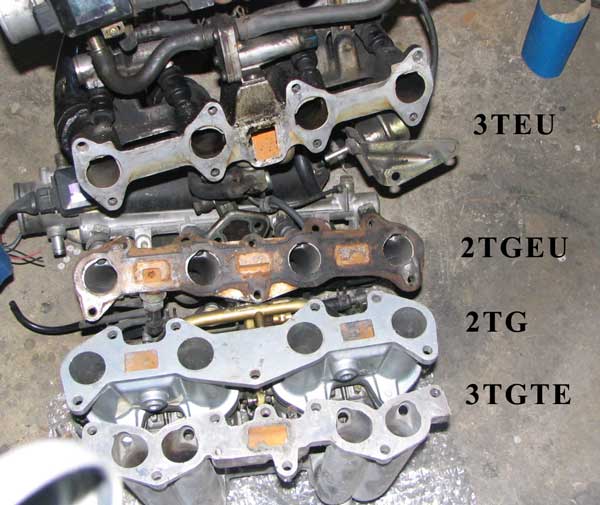
A 2tgeu head, intake and dizzy combo can be swapped onto the 3tgte block with a small gain in power. (note: there's no spark retard on 2t dizzy without changing the diaphragm). A 2tgeu has a forwards facing thermostat outlet suitable for corolla conversions.
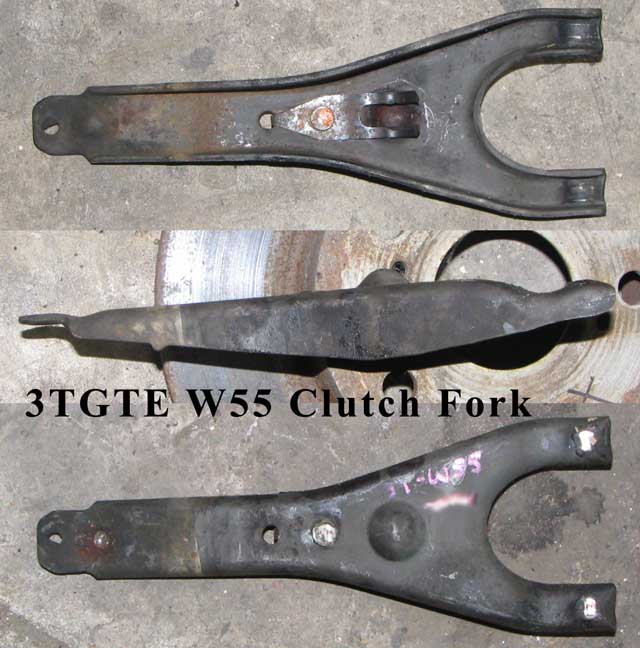
1G-EU and 1G 6cyl variants share the same bolt pattern on the gearbox bell-housing (minus one hole).. BUT the clutch slave and fork is on the opposite side (exhaust side on a 3tgte) so may have clearance issues. 1G has identical clutch fork as 3tgte.
Injectors are low impedance top feed, which can be upgraded to 7mgte injectors (and others) with associated air/fuel tuning.
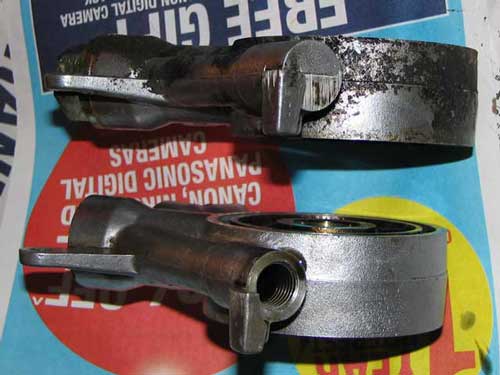
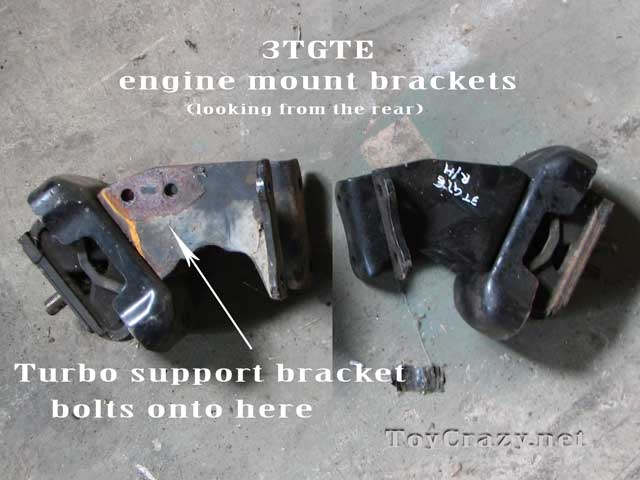
TE71 engine mount brackets are identical in size as 3tgte, but missing the bolt hole(s) for turbo support bracket (see pic). 3tgte has bigger rubber.
Maintenance - Things to watch for:
Remember the 3tgte is now 30+ years old. By now the rubber seals have most likely hardened. Especially the cam cover gasket and half moon seals on back of the head, so expect a few oil and vacuum leaks. Some commonly serviceable parts are still available from Toyota if they have access to jdm parts catalogue (we do in NZ). Alot of genuine parts are now discontinued. An upper gasket set was approx nz$320 in the 00's. (included head gasket, valve seals, cam cover gasket, copper rings, turbo flange gaskets, intake and exhaust gaskets, timing cover gasket, thermostat housing gasket etc). OEM head gasket bought separately was $40-$50. but to buy cam cover gasket alone (there's two parts) was over $100! ACL now sell this same head set #V2059KC.
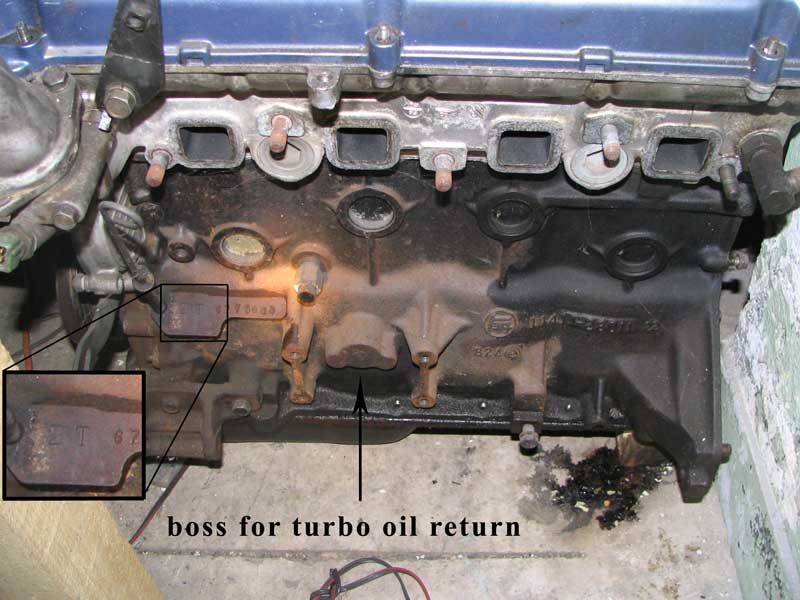
Many gaskets are shared with 2tgeu and have better availability. Internals can be replaced with aftermarket 3t-c parts from USA etc.. forged pistons, rods, bearings (3tgte has a different big-end oil hole position for piston cooling compared to pushrod 3t bearings. 3t-c bearings can still be used, drill out the hole in correct position if you wish to keep the piston cooling jet of oil. aftermarket rods usually don't have the jet anyway).
CT20 turbos aren't known for performance or reliability.. the turbos often start smoking after 150k or so, but as early as 100k, depends on usage.. one of mine had done 180k before blowing smoke. The wastegate seat is prone to cracking and losing boost. best thing you can do is upgrade to a better turbo! a T28 sized garrett makes a great street turbo.
Std exhaust manifold are prone to cracking of the 1st and 4th runners, usually on the inner side facing the engine. Also the exhaust manifold flanges can get quite rough from oxidation, so exhaust leaks are common. Keep the exhaust manifold heat shields fitted as they stop sudden cooling of the manifold.
The diaphragm on the distributor can deteriorate and split so there's no spark advance or more importantly spark retard under boost.
The rotor can split down the shaft... this may not always affect the spark
Rough idle and running rich can be caused by a split fuel pressure regulator.. which will flood fuel into the vacuum hose into the engine intake.
The plastic lobe in the Throttle Position Sensor (TPS) wears. It needs to be adjusted or replaced. The TPS is used for idle mode and closed loop(?) air/fuel adjustment. It's not too major if unplugged.. but just makes it run smoother and more economical. A wavey idle can be caused by the tps not returning to idle mode so the oxy sensor is adjusting air/fuel ratio at idle.
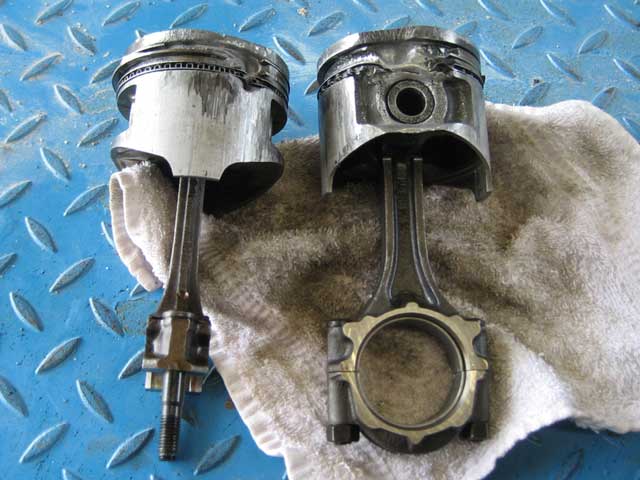
Often see engines with burnt or cracked pistons after owners crank the boost up. Pistons are cast alloy and need safe tuning to ensure reliability. Have known people running temporarily up to 20psi on std internals.. but suitable bolt on mods required and good fuel/spark tuning to keep things safe.
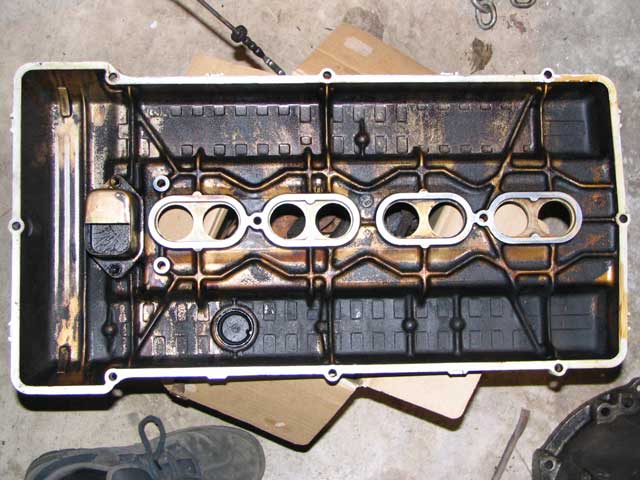
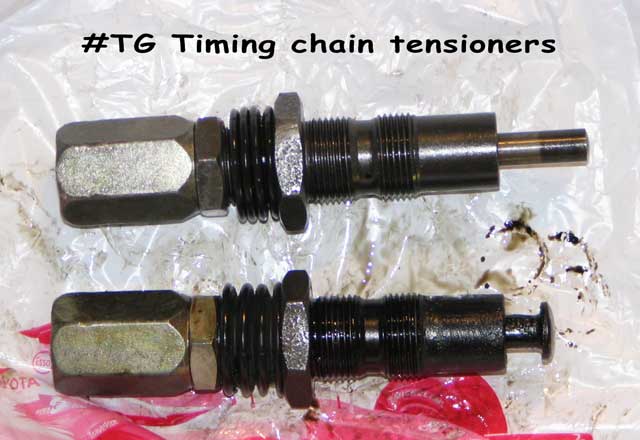
Many people don't know that the hydraulic chain tensioner requires occasional manual adjustment.. If there's too much slack in the chain it'll rattle very noticeably upon startup. Evident with 3 scrape marks underneath the cam cover up near the front (as the chain attempts to jump teeth on the sprockets). This can also be made worse by not using the original rubber cam cover gasket which is about 3mm thick.
To adjust chain tensioner: on the tensioner (found under the distributor) in the middle of the long nut is a hole with a spring-loaded piston inside... pushing the piston in with 5kg of force, there should be 0.5mm movement (give crank a clockwise turn so the slack in the chain is on the tensioner side). If the engine oil is gunky then the tensioner may even be seized. Note: once the tensioner has been adjusted in too far (chain and/or chain guide and/or sprocket worn) the O-ring reaches a step in the tensioner bore which causes it to leak oil.
A 3TGTE may now be problematic with all original aging parts... but so long as you know what to keep check on.. they're sturdy beasts and respond well to modifications.
Interchangeable parts sourced from other Toyota engines
from 3T-C:
sump gasket
main bearings (20.8mm wide)
conrod bearings (with mod to oil hole)
thrust washers
front and rear crank seals
valve seals?
exhaust flange gasket
lower chain
lower chain guide and tensioner
water pump (with recirculating pipe blocked off)
water pump gasket
from 2TGEU:
sump
sump gasket
main bearings (20.8wide)
conrod bearings (with oil hole modification)
front and rear crank seals
head gasket (check type is suitable for boost)
cam cover seal (outer half only)
rear head half circle seals
valves
valve seals
timing cover gasket
timing inspection hole gasket
upper and lower timing chains
chain tensioner
chain guides
exhaust flange gasket
water pump
water pump gasket
thermostat housing gasket
thermostat outlet gasket
alternator (with 2pin plug modification if needed)
from 18RGEU:
valves
valve seals
chain tensioner
chain guides?
